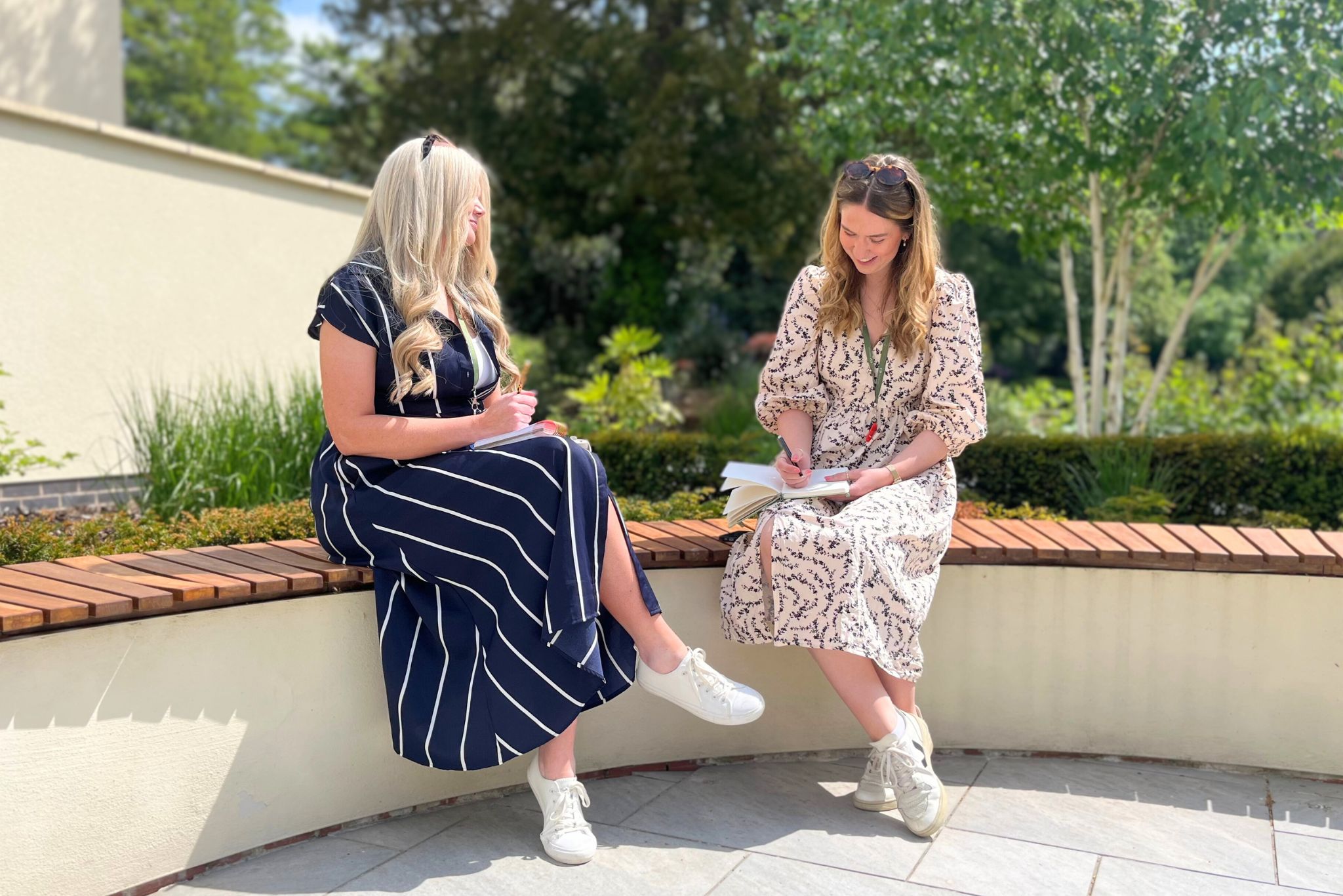
At MacMartin, we believe that powerful branding happens when copywriting and design work together in harmony. In this blog, our Graphic Designer, Sarah, and our Copywriter, Emily, explore how tone of voice and visual identity align to create a lasting impression.
In the world of branding, it’s tempting to think of design and copy as separate entities – words on one side, visuals on the other. However, we know that the most memorable brands are created when they work in unison. As our graphic designer Sarah puts it, “A memorable brand is more than just a logo; it leaves a lasting impression. It’s distinctive. It connects with people and builds recognition through clarity and consistency.”
But how do you actually achieve that? It starts with harmony – between how a brand looks, how it sounds, and ultimately, how it makes people feel. Below, Sarah and Emily, our Graphic Designer and Copywriter respectively, share how visual identity and tone of voice align to form an unforgettable brand.
Building Recognition Through Consistency
Whether it’s the boldness of a headline font or the warmth of a brand’s voice, consistency is what makes a brand memorable. According to Emily, “When the voice stays consistent across every touchpoint – clear, distinctive, and aligned with who the brand is – that’s when it really sticks with people.
This philosophy applies visually too. Sarah explains: “It’s about creating a strong visual identity that people recognise, relate to, and return to.” Visual consistency – through typography, colour palettes, and layout – helps audiences connect on a subconscious level. When paired with a consistent brand voice, that connection becomes even deeper.
“Typography has a powerful psychological impact,” Sarah adds. “Fonts can convey mood and tone, influencing an emotional response before a single word is read.” Similarly, Emily emphasises the importance of maintaining tone across all content. “Depending on the format, you might adapt length or targeting – but your brand voice should stay the same at its core.”
“It’s about creating a strong visual identity that people recognise, relate to, and return to.”
Translating Brand Values into Tangible Experiences
Both design and copy serve a higher purpose: bringing brand values to life. Whether a brand stands for trust, innovation, joy, or adventure, these ideas need to be communicated clearly and cohesively.
Sarah approaches this by asking thoughtful questions to understand the brand’s vision. “Translating values into visuals can be subtle, but it’s all in the detail – consistent choices in fonts, imagery, and colour help reinforce brand identity,” she says. For instance, if innovation is a core value, the design should feel fresh, forward-thinking – not stuck in the past.
Emily’s process is similar: “Give your brand a personality – treat it like it’s human,” she says. “Ask how a reliable person would talk versus an adventurous one. A reliable person speaks clearly, honestly, and consistently. An adventurous one is bold, energetic, and inspiring – the same traits should apply to your brand personality.”
When visuals and language reflect the same values, brands feel more authentic – and that’s what makes them recognisable and memorable.
Colour, Typography, and Tone: Speaking the Same Language
Design and copy are often seen as different languages but when done right, they say the same thing in different ways. Colour psychology, for example, can visually express the same feelings that tone of voice communicates in words.
“Colour can evoke emotion and subtly guide decision-making,” says Sarah. “In one of our recent behaviour change campaigns, we used a red-to-blue gradient to represent the emotional spectrum. It was about visually supporting the message of normalising feelings.” You can learn more about this project here.
Typography plays a similar role. Serif fonts often signal tradition and reliability, while sans serifs suggest modernity and innovation. “Fonts communicate before words do,” Sarah explains. “They set the mood.” Copy does the same – establishing tone, creating mood, and defining a brand’s attitude.
Emily agrees: “When a brand’s foundations are solid – its voice, values, and visuals clearly defined – copy and design naturally align. You’re both working to tell the same story.”
Take a look at this case study to learn more about our branding process:
"Defining your brand’s values, tone of voice, and messaging pillars from the start means everyone’s aligned - and that’s what creates a brand that feels seamless.”
Emily Scott
Copywriter
At the heart of strong branding lies a set of clear, well-thought-out guidelines. For Emily, these are non-negotiable. “Without clear guidelines, consistency is almost impossible. Defining your brand’s values, tone of voice, and messaging pillars from the start means everyone’s aligned – and that’s what creates a brand that feels seamless.”
Sarah echoes this: “When the values, tone of voice and personality is clearly defined, it sets the direction for design. Whether the brand is playful or polished, that clarity gives visuals something to respond to.”
It’s this shared foundation that ensures the brand feels the same whether someone is looking at an Instagram post or reading a whitepaper. “Consistency across touchpoints builds recognition,” Sarah says. “And recognition builds trust.”
Pitfalls to Avoid
While powerful branding is built on synergy, it’s easy to fall into common traps:
Inconsistency – A scattered visual or verbal identity weakens brand recognition.
Over-complication – “Too many colours or fonts create visual noise,” Sarah warns. “Keep it simple and clear.”
Jargon or tone-deaf messaging – “You’re trying to connect, not confuse,” Emily says. “Write for your audience, not yourself.”
Ignoring accessibility and cultural context – Effective brands are inclusive and considerate of diverse audiences, visually and linguistically.
Inconsistency
Over-complication
Jargon
Ignoring accessibility & culture
A memorable brand isn’t built in silos. It’s the result of a thoughtful, collaborative effort – where copywriting and design constantly inform and inspire one another.
At MacMartin, we believe that your brand should look like it sounds, and sound like it feels. When words and visuals work together, the result is more than just something that looks and sounds good – it’s unforgettable.
If you’re looking to create a brand that truly resonates, let’s talk. We’re here to help you bring your vision to life – clearly, consistently, and creatively.